Please wait...

Rights and responsibilities of ILWU membership

Every ILWU member should be taught to see a steward or unit officer first about problems or concerns on the job. They should be advised never to try to settle their problems with management by themselves.

There are four reasons for this: 

1) the member will not have the strength of the union behind them; 
2) the member may make a deal with management that could hurt other members or even be a violation of the contract;

3) the member is not trained to handle the grievance properly and may miss time limits and make other mistakes; and 
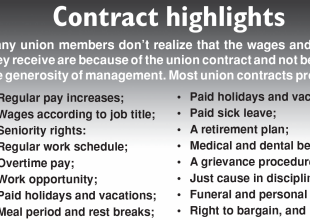
Your union contract—the results of years of struggle

Your union contract is a written agreement with your employer. It guarantees your wages, benefits, conditions of employment, and rights. It is enforceable through a grievance procedure and ultimately in a court of law.

Getting help and contacting your Union

If you want more information about your union or union contract; if you have a problem on the job; if you want to become more involved with your union, the first person you should talk to is your union steward or Unit officer.

Unit officers and stewards are elected by the members of your unit to help their fellow union members on the job. They serve as volunteers and receive no extra pay or special privileges. Their names should be posted on the union bulletin board.

Workers’ right to bargain collectively at risk

ILWU officers and members march in support of workers’ rights in the State of Wisconsin at the Hawaii State Capitol on February 26, 2011. (Front, left to right) Oahu Business Agent Shane Ambrose, Michael Ruiz and Tavita Tufaga from Unit 4415 - Hawaiian Memorial Park, and former unit officer from The Honolulu Advertiser Rick DeCosta.

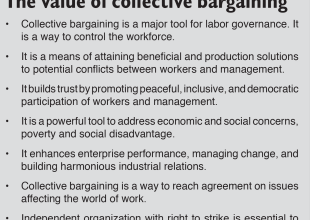
Collective bargaining is fundamental worker right

Four fundamental principles and rights at work 

1) Freedoms of association and collective bargaining. 
2) Elimination of forced and compulsory labor. 
3) Elimination of discrimination in employment and occupation. 
4) Abolition of child labor.

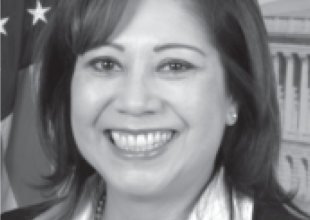
Why collective bargaining is good for America

I was “raised union.”

My mother, who immigrated to the United States from Nicaragua, worked the 3 p.m. to midnight shift at a toy factory after the birth of my younger twin sisters. She was a member of the United Rubber Workers, which later merged with the Steelworkers Union.

Do you want to work for less pay?

What you need to know about the “right to work for less”

There are 22 states which have a so-called “Right-To-Work” law which prohibits agreements between unions and employers which require workers to pay union dues as a condition of employment. In these states, workers in a unionized workplace can not be required to become union members nor pay union dues. Yet these workers would get all the benefits under the collective bargaining agreement negotiated by the union without having to pay any of the costs to support the union’s operations.

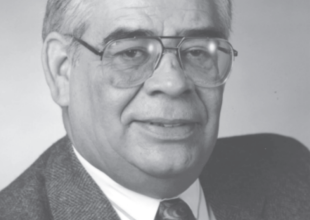
Joe Ibarra, former ILWU International Secretary Treasurer, passes away

Former ILWU International Secretary Treasurer and Local 26 President, Joe Ibarra, passed away on February 11th. He was 69 years old. Joe’s life was celebrated at a memorial service on March 4th in San Pedro, CA by family, friends, and his union brothers and sisters. Joe was remembered for a lifetime of outstanding service to workers and for his dedication to social and economic justice for all people.

Love’s members testify for labeling frozen bread

Grocery stores are selling the thawed, previously frozen bread which comes from the mainland on the same shelves as the fresh baked bread produced by Love’s Bakery. Because of higher profit margins, many grocery chains are giving the frozen bread the best shelf positions and pushing the locally produced Love’s bread to the bottom shelves.

Consumer right to information and protection

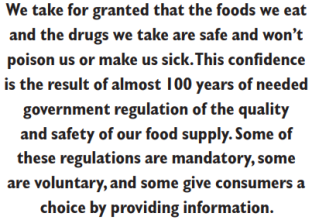
The United States Food and Drug Administration (FDA) is responsible for assuring that foods sold in the United States are safe, wholesome and properly labeled. This applies to foods produced domestically, as well as foods from foreign countries. The Federal Food, Drug, and Cosmetic Act (FD&C Act) and the Fair Packaging and Labeling Act are the Federal laws governing food products under FDA’s jurisdiction.

Subscribe to